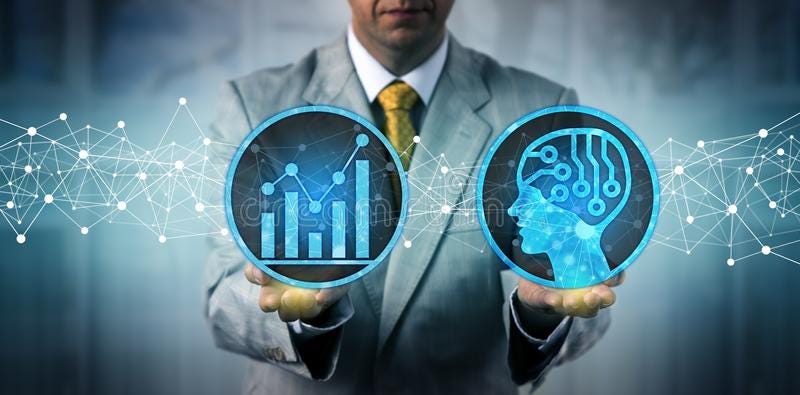
Big data has made manually processing and identifying relevant information impractical, if not impossible for today’s marketers. Have consumer expectations exceeded marketers’ capabilities, or do organizations just need a helping hand in order to meet them?
The modern consumer is engaged on multiple devices and platforms every day. Not only that, he/she expects an individualized and unique experience across every single one of their interactions with a brand — any message that a brand sends that isn’t uniquely tailored to his/her needs isn’t likely to make an impact.
Despite the plethora of ad tech and martech meant to make this kind of individualization and personalization easier, marketers are struggling to meet increasingly high user expectations. In fact, these would-be solutions only create more problems as the marketer needs to manage them and figure out how to make them work together seamlessly.
The Data Silo Dilemma
In part, the siloing of data is to blame. All the information collected from the various channels are funneled into individual databases or technologies that don’t necessarily communicate with one another. This leaves it up to the marketers themselves to harvest, sort through and process the data. Not only does this chew up valuable time and money, it also increases the possibility for human error and inaccurate assessments, which can render the information virtually useless — big data is only powerful when accurate, relevant correlations can be drawn between all data sets.
Moreover, because the data from each channel is siloed, the campaigns for each channel are thereby siloed as well. Since the performance of a single campaign on one channel can’t be connected to its performance on another, campaigns must be tweaked and optimized on a channel-by-channel basis. This leads to even more (potentially mistaken-ridden) manual data analysis, longer decision-making processes, and delayed reactions. No wonder just 11% of CMOs told eMarketer their companies have successfully implemented a sophisticated omnichannel strategy.
Consumer Confusion
The wide array of media platforms and channels isn’t just confusing to marketers — it’s part of what’s driving consumers to seek more individualized, human-like interactions. Forrester found that the percentage of travelers booking flights online has actually been declining year over year. Tired of dealing with automated and impersonal systems, consumers are actively looking for interactive brand experiences that treat them like individuals.
But despite the fact that creative messaging is more in demand from consumers than ever before, marketers too often find themselves bogged down by data analysis work, unable to focus on creative and strategic priorities. Tasks like continuous testing and optimization of campaigns on various marketing platforms create a practically endless stream of work for creative and research teams, draining your staff’s capacity to work on more personalized, engaging campaigns.
The key is handing off the right work to the right software — autonomous marketing platforms are capable of building engaging, hyper-targeted campaigns from your creative material that quickly drive exponential results using creative material developed by human marketers.
Less Menial Work, Higher Morale
By investing in software that’s capable of automating much of this manual data analysis, organizations can not only accomplish more work, but raise the morale of their marketing staffs. Computers should come to support employees and enable them to focus on work that requires creative thinking, rather than tedious work that revolves around data entry. As researchers have discovered, happier, more fulfilled employees are more effective at their jobs, which in turn results in happier, more engaged customers.
Big data is a tremendous challenge to deal with manually, but if it’s dealt with effectively (i.e. with the right software), it only makes marketers more effective than they’ve ever been. Creative marketers can focus on the work they love, and leave the dense data processing to a computer that can complete the tasks more quickly and more efficiently anyway. Big data may be too big for humans, but with autonomous marketing, that can only mean good news for your company.


