
Attribution is difficult no matter who you are, but if most or all of your conversions happen offline, it can feel downright impossible. Here’s how you can make sure that every offline purchase is linked to the online activity that inspired it.
If there’s a Holy Grail of digital marketing, it’s true attribution. The ability to understand the path to purchase at the individual level is the ideal for any organization, enabling them to replicate successful one-to-one interactions over and over again. ROAS for every campaign would be maximized, and efficient allocation of marketing budget across channels would be as simple as crunching the data from a few spreadsheets.
But like the original Holy Grail, this kind of perfect attribution can feel more like fiction than fact. That’s especially true in verticals like retail, where a significant portion or majority of conversions happen offline. All the tech infrastructure organizations have built to collect and analyze data on consumer demographics, behavior, and preferences is of little use if it can only be connected to a small segment of actual purchases. Without visibility into that crucial final touch, what’s the point in understanding all the small digital interactions that led to it?
Luckily, tying offline purchases, whether they’re made in-store, over the phone, or via mail order, to web-based experiences is far from impossible — it just requires implementing the right tools, then creating the right processes to link activity between them. Here’s what your organization needs to do to effectively synchronize offline conversions with digital activities.
Integrating Your POS, CRM, and Madtech (marketing and adtech)
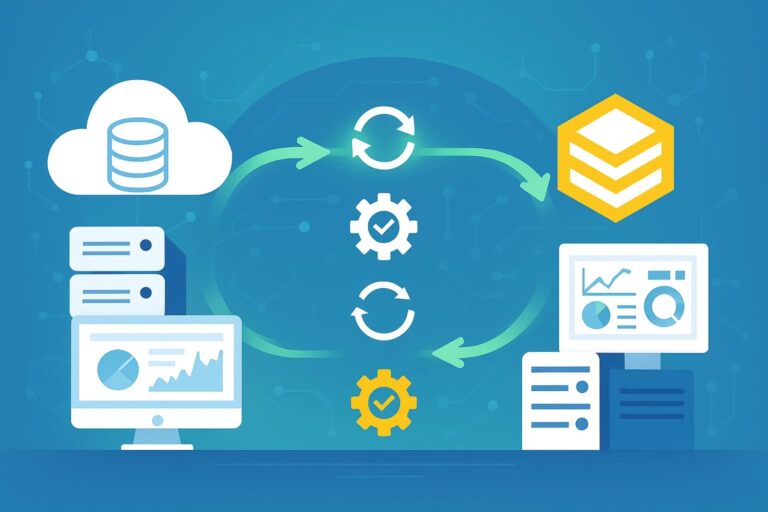
Ideally, your company has a digital point of sale (POS) system that’s directly connected to your CRM, which in turn is directly connected to your “madtech.” This effectively allows you to automate the process of bridging the gap between online and offline interactions.
Say you’re a motorcycle dealership with such an arrangement: when users are inspired by an online campaign to call in and buy a motorcycle, the salesperson who took the call enters the customer’s number into the POS, as they do with every call. That information is automatically fed into the CRM, which will check to see if that phone number is already associated with a consumer in its database. If such a match is found, your madtech platform should then be able to match that user with a particular online journey it’s observed, thereby completing the loop.
More likely than not, however, your company’s own situation differs in some respect from this ideal scenario. Your POS may not be digital, or for some other reason be incapable of integrating with your CRM. Salespeople in these situations would be required to do a bit more manual work, updating a digital file that is readable to marketing platforms with information like the time a sale was made, the customer’s name and contact info, basic demographic data, and any other information that might populate a CRM each time a sale is made.
Regardless of these variations, however, work processes can be adjusted to fill in whatever gaps exist between disconnected technologies so that point of sale information is procedurally fed back into databases where marketers can easily access it. But this bridge between offline conversions and digital activities is meaningless if you can’t form coherent online journeys with the data you already have. To close this loop and deliver true attribution, you need marketing and ad tech that is seamlessly connected across online channels.
Unifying Data from All Digital Channels
Multi-touch attribution for each purchase is only possible with full integration of every piece of ad tech and martech in your technology stack, and that’s no small achievement. As we’ve noted before [link to cross-channel challenge article], experts estimate the number of marketing tech solutions available today to be somewhere north of 4,000, a number that is growing all the time as the industry expands. An effective tech stack sometimes features many tens of applications — making sure that these programs can communicate with each other not only after installation, but through years of updates can prove daunting, to say the least.
Basing software purchasing decisions on the ability to integrate rather than price or quality is a recipe for disaster. A much more efficient and effective solution would be to purchase a marketing solution that is capable of connecting all the others, unifying all the data – while simultaneously executing, optimizing and analyzing in real-time, 24/7. This makes it possible to connect the digital dots that eventually lead to offline conversions, completing customer journeys and making it possible to draw real insights from every user interaction.
A cross-channel marketing platform like Albert from Adgorithms can also connect to your CRM and POS data, effectively bridging the divide between offline purchases and the digital touchpoints that spur them. With a fully closed loop between sales and marketing, true attribution doesn’t seem like such a fantasy any longer.


